Buying Lab Grown Diamond Engagement Rings in Dubai: 7 Tips
- August 3, 2026
- 35
Buying Lab Grown Diamond Engagement Rings in Dubai
An engagement ring is more than a piece of jewellery. It represents a promise, a milestone and a story that couples may carry for the rest of their lives.
For generations, natural diamonds have dominated the engagement-ring market. But today’s couples have another option: lab grown diamond engagement rings.
Lab-grown diamonds have become an important part of the modern jewellery market because they offer the appearance, durability and optical characteristics associated with diamond while giving buyers a different option in terms of origin and price.
For shoppers in Dubai and across the UAE, this category is particularly interesting. Dubai has a sophisticated diamond and jewellery ecosystem, and the Dubai Multi Commodities Centre (DMCC) describes its diamond ecosystem as home to more than 1,350 companies across the sector. DMCC also operates a dedicated lab-grown diamond ecosystem emphasizing disclosure and transparency.
But buying a lab-grown engagement ring should not simply be about finding the biggest diamond for the lowest price.
A beautiful ring depends on diamond quality, cut, setting, craftsmanship, certification, proportions and design.
So, what should you know before choosing one?
Let’s explore everything UAE buyers need to know about lab grown diamond engagement rings.
What Is a Lab Grown Diamond?
Before choosing a ring, it is important to understand what “lab grown” actually means.
A laboratory-grown diamond is produced through a technological process rather than being formed naturally deep within the Earth.
The two major production methods are:
- CVD — Chemical Vapor Deposition
- HPHT — High Pressure High Temperature
According to the Gemological Institute of America (GIA), laboratory-grown diamonds have essentially the same chemical composition, crystal structure, optical properties and physical properties as natural diamonds. The major difference is their origin and growth history.
That means a lab-grown diamond is not the same as a diamond simulant.
A simulant such as cubic zirconia may look similar to diamond but is a different material.
A lab-grown diamond, on the other hand, is diamond.
This distinction is important when shopping for an engagement ring.
Product Inspiration: Lab Grown Diamond Engagement Ring Designs
The product images you provided are excellent examples of different engagement-ring styles and can be incorporated throughout the article to make the page more visually engaging.
1. Lab Grown Diamonds Are Real Diamonds
One of the biggest questions first-time buyers ask is:
“Are lab grown diamonds real?”
Yes.
Lab-grown diamonds are genuine diamonds produced in a controlled environment.
GIA explains that laboratory-grown diamonds have essentially the same chemical, physical and optical properties as natural diamonds.
The difference is where and how they formed.
Natural diamond
A natural diamond forms naturally under geological conditions deep within the Earth.
Lab-grown diamond
A laboratory-grown diamond is created using technological processes designed to reproduce the conditions needed for diamond growth.
Therefore, when you purchase a lab-grown diamond engagement ring, you are not buying a piece of glass or imitation stone.
You are buying a diamond with a laboratory origin.
This is one of the most important facts consumers should understand before shopping.
2. Why Choose a Lab Grown Diamond Engagement Ring?
There are several reasons couples consider lab-grown diamonds.
More flexibility with the budget
One of the biggest attractions is price.
Because laboratory-grown diamonds can be manufactured, they generally occupy a different price category from natural diamonds.
This can give couples more flexibility when designing an engagement ring.
Instead of allocating the entire budget toward the centre diamond, a buyer may choose to invest more in:
- A larger centre stone
- A higher-quality cut
- A premium metal
- Additional side stones
- A custom setting
- Detailed craftsmanship
For example, someone with a fixed engagement-ring budget may prefer a larger lab-grown centre diamond while choosing a sophisticated setting.
The important point is that lower price should not mean lower standards.
3. Understand the 4Cs Before You Buy
Whether you choose natural or lab-grown, you should understand the famous 4Cs:
Cut
Color
Clarity
Carat
These characteristics help buyers evaluate the diamond.
Cut: The Most Important Visual Factor
Cut is frequently misunderstood.
Cut does not mean the shape of the diamond.
A round diamond and an oval diamond are shapes.
Cut describes how effectively the diamond has been proportioned and finished to interact with light.
A well-cut diamond can produce:
- Brightness
- Fire
- Scintillation
- Strong visual performance
When buying an engagement ring, don’t automatically choose the diamond with the highest carat weight.
A smaller, beautifully cut diamond can look more impressive than a larger poorly cut stone.
Color
Color describes how much body color is present in a diamond.
Many engagement-ring buyers prefer diamonds that appear white or near-colorless.
Your choice can also depend on the metal.
For example:
White gold or platinum
A near-colorless diamond can complement the cool appearance of the metal.
Yellow gold
Slightly warmer diamond color can sometimes work beautifully with the warmth of the setting.
There is no single correct combination.
The goal is visual harmony.
Clarity
Clarity refers to characteristics inside or on the surface of a diamond.
These characteristics can include:
- Inclusions
- Blemishes
- Internal features
Higher clarity generally means fewer visible characteristics.
However, buyers should consider whether clarity differences are actually visible to the naked eye.
Paying significantly more for a higher clarity grade may not always produce a noticeable improvement in appearance.
Carat
Carat measures diamond weight.
It does not directly mean visual size.
Two diamonds with identical carat weights can have different dimensions depending on their proportions and shape.
This is especially important when comparing:
- Round
- Oval
- Pear
- Cushion
- Emerald
- Radiant
- Heart
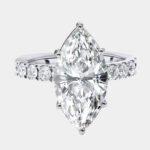
- Marquise
The shape can dramatically influence how large the diamond appears on the finger.
4. Choose the Right Engagement Ring Shape
Lab-grown diamonds are available in many popular shapes.
Round Lab Grown Diamond
The round brilliant remains one of the most recognizable engagement-ring choices.
It offers a classic appearance and works well with:
- Solitaire settings
- Halo settings
- Three-stone designs
- Pavé bands
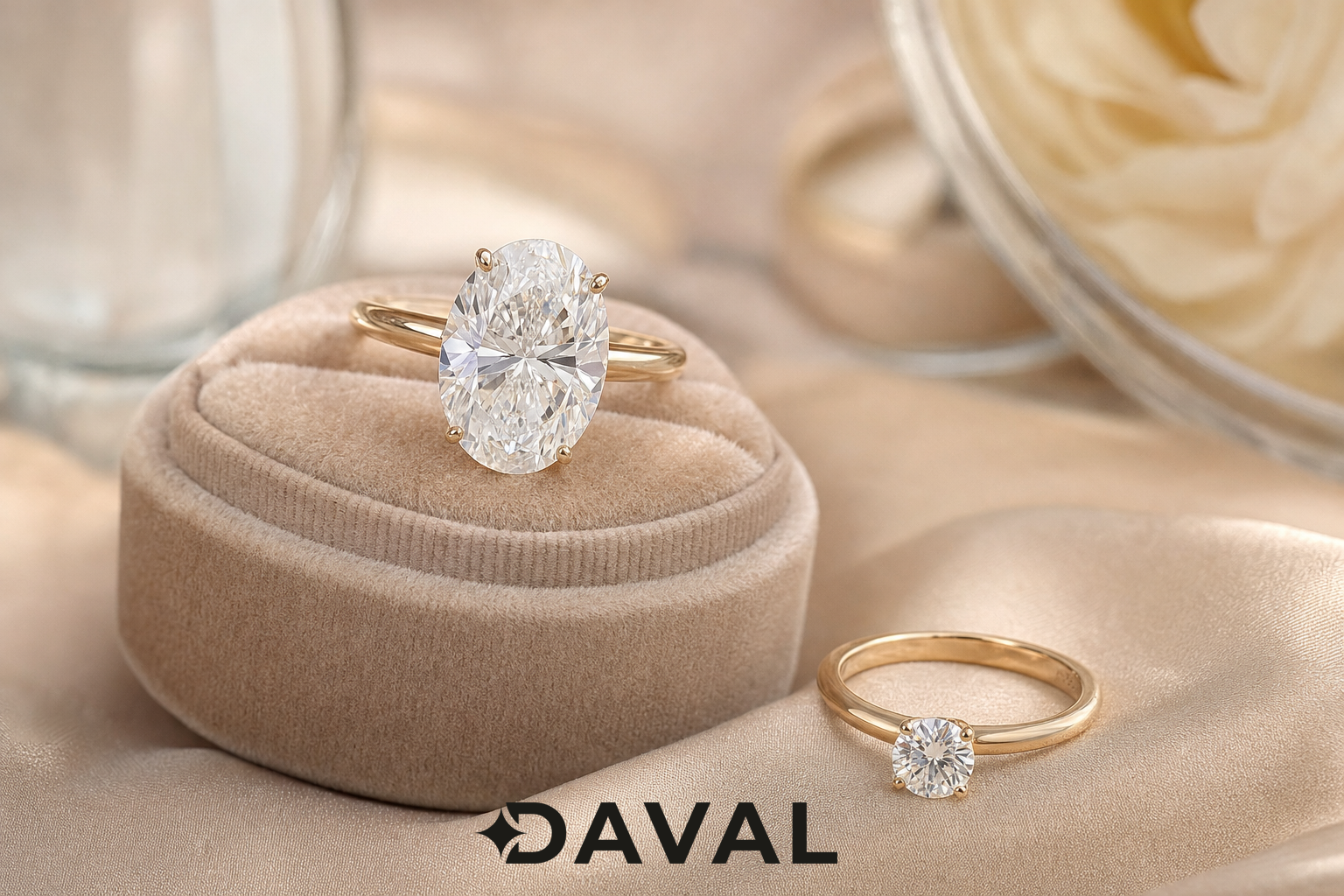
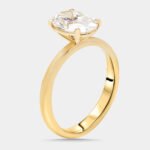
The first product image you supplied is an excellent example of a classic solitaire direction.
Oval Lab Grown Diamond
Oval diamonds have become extremely popular among modern engagement-ring buyers.
Their elongated shape can create an elegant appearance and can visually lengthen the finger.
The second supplied product image demonstrates how an oval centre stone can be combined with a halo setting for a more glamorous appearance.
Heart-Shaped Lab Grown Diamond
The heart shape is one of the most romantic choices.
It is especially suitable for buyers who want their engagement ring to have a strong symbolic meaning.
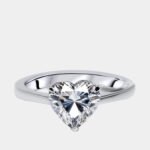
The third product image provides a good visual example.
Other Popular Shapes
Depending on your jewellery collection, you can also consider:
- Pear
- Cushion
- Emerald
- Radiant
- Marquise
- Princess
Each creates a different personality.
A diamond shape should therefore be selected according to personal style rather than trend alone.
5. Pick the Right Metal
The metal surrounding your lab-grown diamond has a major impact on the final appearance.
14K Gold
14K gold can provide durability and an attractive balance between precious-metal content and everyday wearability.
18K Gold
18K gold contains a higher proportion of pure gold and has a richer appearance.
It is available in:
- White gold
- Yellow gold
- Rose gold
Platinum
Platinum is a premium choice for engagement rings.
It offers a naturally white appearance and is widely associated with luxury jewellery.
6. Yellow Gold Lab Grown Diamond Engagement Rings
The first product image you supplied is particularly useful for demonstrating this style.
A yellow-gold band creates a warm contrast against a bright diamond.
This combination can produce a classic luxury appearance without requiring an overly complicated setting.
Why choose yellow gold?
It can work particularly well for someone who likes:
- Traditional jewellery
- Warm tones
- Classic luxury
- Minimalist designs
- Timeless engagement rings
A simple yellow-gold solitaire can remain fashionable for decades because it does not depend heavily on short-lived design trends.
7. Halo Lab Grown Diamond Engagement Rings
The second supplied image demonstrates the halo concept.
A halo setting places smaller diamonds around the central diamond.
This creates several advantages:
- Additional sparkle
- A more dramatic appearance
- Greater visual presence
- A glamorous aesthetic
Halo rings can be especially appealing to buyers who want the engagement ring to make a strong visual statement.
However, the design also requires careful craftsmanship.
The smaller surrounding stones should be properly aligned and securely set.
This is why buyers should evaluate the entire ring, not just the centre diamond.
8. Heart-Shaped Lab Grown Diamond Engagement Rings
The third image is a strong example of a symbolic engagement-ring design.
The heart shape naturally connects the jewellery with the meaning of love.
It can be a great choice for someone who wants something less conventional than a round or oval centre stone.
However, heart-shaped diamonds require careful cutting.
Symmetry is particularly important.
A poorly proportioned heart may not display the balanced shape that buyers expect.
When selecting a heart-shaped lab diamond, pay attention to:
- Symmetry
- Outline
- Point definition
- Proportions
- Cut quality
- Setting protection
9. Why Certification Matters
Certification should be one of your priorities when purchasing a significant diamond.
A grading report provides information about the stone and helps you compare one diamond with another.
For example, IGI’s laboratory-grown diamond reports can identify the stone as laboratory-grown and provide information including shape, measurements and the 4Cs.
IGI also explains that its laboratory-grown diamond grading process uses advanced technology to distinguish laboratory-grown diamonds from natural diamonds and simulants.
Before purchasing, ask:
Does the ring come with a grading report?
Can the report number be verified?
Does the report correspond to the exact centre stone?
These are simple questions, but they can make the buying process more transparent.
10. Lab Grown Diamond Engagement Rings in Dubai
Dubai is a particularly interesting market for diamond buyers.
The city has developed a substantial diamond-trading ecosystem.
According to DMCC, its broader Diamond Ecosystem includes more than 1,350 companies across the sector.
DMCC also has a dedicated lab-grown diamond ecosystem that emphasizes transparency and says participating members must ensure lab-grown and natural diamonds are not mixed and that lab-grown products are fully disclosed.
For consumers, this reinforces an important principle:
Transparency matters.
When shopping for a lab-grown engagement ring in Dubai, the seller should clearly communicate:
- Diamond origin
- Certification
- 4Cs
- Metal type
- Ring weight
- Price
- Warranty
- Return policy
- Exchange policy
- After-sales service
A luxury purchase deserves clear information.
11. Are Lab Grown Diamond Engagement Rings a Good Investment?
This is one area where buyers should have realistic expectations.
An engagement ring is primarily a luxury and emotional purchase, not a conventional investment.
Lab-grown diamonds can provide excellent value at the point of purchase, but that does not mean they should automatically be expected to appreciate in value.
The market for lab-grown diamonds has experienced significant price changes as production technology has expanded.
Therefore, if resale value is important to you, ask the jeweller about:
- Buyback programs
- Upgrade programs
- Exchange policies
- Store credit
- Resale assistance
Never assume that the original retail price will be the future resale price.
The strongest reason to buy a lab-grown engagement ring should be that you love the diamond, design and value proposition.
12. Are Lab Grown Diamonds Ethical?
The word “ethical” should be used carefully.
One potential advantage of laboratory-grown diamonds is that their production does not require traditional diamond mining.
However, environmental impact depends on how and where the diamond is produced, including factors such as energy sources and manufacturing processes.
Therefore, consumers should avoid relying solely on broad marketing statements.
Instead, ask for specific information about:
- Production
- Origin
- Certification
- Manufacturing
- Supply chain
- Sustainability claims
Transparency is more valuable than a vague “eco-friendly” label.
13. Lab Grown vs Natural Diamond Engagement Rings
| Feature | Lab Grown Diamond | Natural Diamond |
|---|---|---|
| Origin | Laboratory | Natural geological formation |
| Chemical composition | Diamond | Diamond |
| Crystal structure | Diamond | Diamond |
| Visual appearance | Can be visually indistinguishable | Natural diamond appearance |
| Price category | Generally lower | Generally higher |
| Supply | Manufactured | Naturally limited |
| Certification | Available from grading labs | Available from grading labs |
| Resale expectations | Should be approached cautiously | More established market |
| Custom designs | Excellent option | Excellent option |
| Emotional value | Personal | Personal |
| Rarity | Not geologically rare | Naturally rare |
GIA confirms that lab-grown diamonds have essentially the same chemical, physical and optical properties as natural diamonds while having a different growth history.
So the choice ultimately comes down to what matters most to you.
14. How Much Should You Spend on a Lab Grown Engagement Ring?
There is no universal amount.
A better approach is to establish your total jewellery budget first.
Then divide it between:
- Centre diamond
- Side diamonds
- Metal
- Craftsmanship
- Certification
- Customization
- After-sales service
Do not spend your entire budget on carat weight.
A beautiful engagement ring is a combination of:
Diamond + setting + craftsmanship + proportion + comfort + personal style.
For example, a slightly smaller diamond with an excellent cut and beautiful setting can be more impressive than a much larger diamond chosen only because it has a higher carat weight.
15. What Makes a Lab Grown Engagement Ring Look Luxurious?
Luxury is not determined by carat weight alone.
A ring can look exceptionally luxurious because of:
Excellent diamond cut
The diamond interacts beautifully with light.
Proportion
The centre stone and setting work together.
Fine craftsmanship
The prongs, band and finishing are carefully executed.
Metal quality
The chosen metal complements the stone.
Design
The ring has a distinctive visual identity.
Comfort
The ring feels natural when worn.
Certification
The buyer has confidence in the diamond’s characteristics.
This is particularly important in Dubai’s luxury jewellery market, where consumers can compare many different designs and price points.
16. Questions to Ask Before Buying a Lab Grown Engagement Ring
Before you make your purchase, ask your jeweller these questions:
1. Is the centre diamond laboratory-grown?
The answer should be clear.
2. What is the diamond’s certification?
Ask for the grading report.
3. What are the 4Cs?
Understand the exact carat, color, clarity and cut.
4. Is the diamond CVD or HPHT?
Ask about the growth method.
5. What metal is the ring made from?
For example:
- 14K gold
- 18K gold
- Platinum
6. What is the total jewellery weight?
This helps you understand the construction of the ring.
7. Are the side stones natural or lab-grown?
Make sure you understand what you are purchasing.
8. What is the warranty?
Ask what is covered.
9. Can the ring be resized?
This is especially important for engagement rings.
17. Why Disclosure Matters
A professional jewellery purchase should be transparent.
The U.S. Federal Trade Commission’s Jewelry Guides emphasize truthful representation of jewellery characteristics and disclosure of material information, including whether products are laboratory-created or imitation stones.
For UAE consumers, the broader lesson is simple:
Know exactly what you’re buying.
The product description should clearly communicate whether the diamond is:
- Natural
- Laboratory-grown
- Simulated
This becomes particularly important when comparing prices.
A natural diamond and a lab-grown diamond should not be compared purely by carat weight without considering origin and other characteristics.
18. How to Choose the Perfect Lab Grown Diamond Engagement Ring
If you’re overwhelmed by the choices, follow this simple process.
Step 1: Set your budget
Determine what you are comfortable spending.
Step 2: Select your preferred shape
Choose between:
- Round
- Oval
- Cushion
- Pear
- Emerald
- Radiant
- Heart
- Marquise
Step 3: Prioritize cut
For many buyers, cut should receive significant attention because of its effect on brilliance.
Step 4: Compare color
Decide how white you want the diamond to appear.
Step 5: Choose clarity
Look for a balance between visual appearance and price.
Step 6: Choose the metal
Consider:
- Yellow gold
- White gold
- Rose gold
- Platinum
Step 7: Select the setting
Choose:
- Solitaire
- Halo
- Three-stone
- Pavé
- Hidden halo
- Bezel
- Cathedral
Step 8: Verify certification
Check the report before completing the purchase.
Step 9: Review the warranty
Understand after-sales support.
Step 10: Try the ring
If possible, see how the ring looks on the finger.
Is a Lab Grown Diamond Engagement Ring Right for You?
Choosing an engagement ring is ultimately a personal decision.
There is no single diamond that is perfect for every couple.
Natural diamonds remain appealing because of their geological history, rarity and traditional luxury positioning.
Lab-grown diamonds offer another approach—combining genuine diamond material with laboratory origin, technological innovation and generally lower pricing.
For couples shopping in Dubai, the variety of available designs makes it possible to create something highly personal.
Whether you choose a classic yellow-gold solitaire like the first design, a dramatic oval halo like the second, or a romantic heart-shaped design like the third, the most important consideration is that the ring represents your relationship and suits your personal style.
When purchasing, remember the fundamentals:
Check the 4Cs.
Verify the certification.
Understand the diamond’s origin.
Choose a quality setting.
Ask about warranty and after-sales service.
Don’t assume resale value.
And most importantly:
Choose a ring because you love it—not simply because it has the biggest carat weight.
A well-designed lab grown diamond engagement ring can combine brilliance, craftsmanship and personal meaning into a piece of jewellery designed to celebrate one of life’s most important moments.
For modern couples in Dubai and across the UAE, that makes lab grown diamond engagement rings an increasingly compelling option for saying “Yes.”
Related posts
7 Reasons UAE Buyers Are Asking More About Lab Diamonds in 2026
Close up of certified lab grown diamond Lab grown diamond jewellery in Dubai Why Are UAE Buyers Asking
Are Lab Diamonds a Good Investment? Resale Value & Market Trends
Diamonds have traditionally been associated with luxury, rarity, romance, and long-term value. But the
Daval Jewels Lab Grown Diamonds Dubai | Premium Diamond Jewelry in Dubai
Daval Jewels: Redefining Luxury with Lab Grown Diamonds and Diamond Jewelry in Dubai Dubai has long been
Lab Grown Diamonds in Dubai: The Complete UAE Buyer’s Guide
Lab Grown Diamonds in Dubai: The Complete UAE Buyer’s Guide Lab grown diamonds have moved from
Ethical Luxury in the UAE: The Future of Lab-Created Diamond Jewellery
Luxury has always been associated with exclusivity, beauty, and craftsmanship. However, modern consumers
Loose Lab Grown Diamonds in Dubai: How to Choose the Best Stone for Your Ring
Dubai has long been synonymous with exceptional luxury, world-class craftsmanship, and an unrivalled