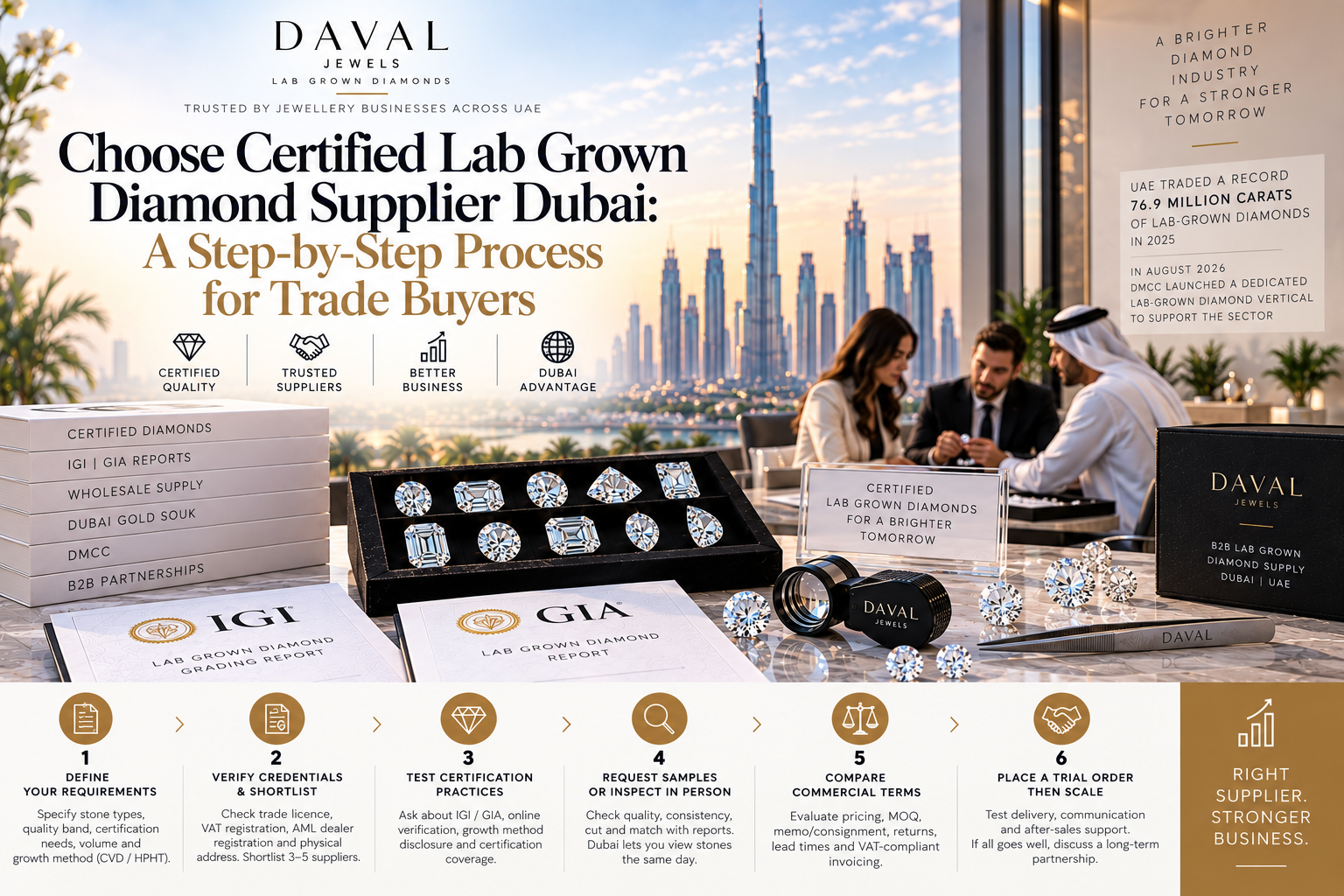
Choose Certified Lab Grown Diamond Supplier Dubai: A Step-by-Step Process for Trade Buyers
The UAE traded a record 76.9 million carats of lab-grown diamonds in 2025, nearly double the year before, and at the end of August 2026 DMCC launched a dedicated lab-grown diamond vertical to support the sector. More suppliers means more choice, but also more variation in quality, paperwork and reliability. This guide sets out a practical, six-step process to choose certified lab grown diamond supplier Dubai partners methodically — from defining what you need to placing a trial order.
It is written for jewellers, designers and retailers buying for resale or manufacture. If you want a list of warning signs or a deep dive into what a grading report proves, see our other supplier guides; this one is about the order of operations.
Why a Process Matters in Dubai’s Lab-Grown Market
Trade value in the UAE grew far more slowly than volume last year — single digits against roughly 90% growth in carats. In plain terms, prices per carat keep falling and competition is intense. That pushes some sellers to cut corners on grading, disclosure or after-sales terms.
A structured selection process protects your margin in three ways. It stops you comparing suppliers on price alone, it surfaces documentation problems before money changes hands, and it gives you a like-for-like basis for comparing quotes from Gold Souk showrooms, DMCC-based traders and overseas exporters.
How to Choose Certified Lab Grown Diamond Supplier Dubai Partners: 6 Steps
Step 1: Define Your Requirements Before You Call Anyone
Write down what you actually buy. Suppliers vary widely in what they stock well, so a clear spec saves weeks of back-and-forth. Cover:
- Stone types: centre stones (0.5 ct and up), calibrated melee, matched pairs, or fancy shapes
- Quality band: the colour and clarity range your customers expect
- Certification needs: which stones must carry an individual report, and from which lab
- Volume and frequency: one-off projects versus monthly replenishment
- Growth method preference: whether you need CVD, HPHT, or are indifferent — either way, it should be disclosed
Step 2: Build a Shortlist and Verify Credentials
Aim for three to five candidates. For each one, confirm the basics before discussing stones:
- A valid Dubai trade licence (mainland through Dubai Economy and Tourism, or a free-zone licence such as DMCC) covering precious stones
- A UAE VAT registration number, so your invoices are compliant
- Registration as a dealer in precious metals and stones for anti-money-laundering purposes, which UAE regulators require of the trade
- A physical address you can visit — a showroom or office, not just a WhatsApp number
This step is quick and eliminates a surprising share of online-only sellers.
Step 3: Test How Seriously They Take Certification
This is the step that separates a certified supplier from one that simply mentions certificates. Ask each shortlisted supplier:
- Which labs do you use? IGI grades the large majority of lab-grown stones and still issues full colour and clarity grades. GIA, which grades a small share of the market, moved in late 2025 to a simplified “Premium” or “Standard” designation rather than the traditional 4Cs scale. Both are legitimate, but they are not directly comparable, so know which one your customers expect.
- What share of your stock is certified? Larger stones should come with an individual report; melee is usually sold in parcels with a supplier guarantee.
- Can I check reports online? Every report number should verify on the issuing lab’s website, and for larger stones should match a laser inscription on the girdle.
- Is the growth method stated? Reputable reports and invoices note whether a stone is CVD or HPHT grown and whether it has been post-growth treated.
A supplier who answers these clearly, without hesitation, is usually organised elsewhere too.
Step 4: Request Samples or Inspect Stones in Person
Paper checks only go so far. Ask for a small selection that matches your spec from Step 1, and assess:
- Whether the stones match their reports (use a loupe and the inscription)
- Consistency across a parcel — colour and size uniformity matters enormously for melee
- Cut quality and finish, which reports simplify and which your customers notice
Being based in Dubai is an advantage here. A local supplier lets you view stones the same day instead of waiting on international couriers.
Step 5: Compare Commercial Terms Side by Side
Put every shortlisted supplier’s terms into one table. The cheapest per-carat quote is rarely the best deal once terms are included. Compare:
| Term | What to ask |
|---|---|
| Pricing | Is pricing per carat, per stone, or per parcel? Are certification fees included? |
| Minimum order | Is there an MOQ, and does it apply per order or per month? |
| Memo / consignment | Can you take stones on approval for client viewings? |
| Returns | What is the window, and are certified stones returnable? |
| Lead times | How fast can they source a stone outside their inventory? |
| Invoicing | Are invoices VAT-compliant and do they state the growth method? |
Step 6: Place a Trial Order, Then Scale
Start with an order that is large enough to test the relationship but small enough that a problem will not hurt you. Track how accurately the delivery matches the quote, how quickly queries are answered, and how any issue is resolved.
If the trial goes well, discuss a longer arrangement: reserved inventory, priority sourcing, or private-label packaging. Daval Jewels works with jewellery businesses on exactly this kind of arrangement from our Gold Souk showroom — our B2B lab-grown diamond supply programme explains how we handle certified stock, custom sourcing and trade enquiries.
What to Check When You Compare Final Candidates
Before committing, run through a final checklist for your top two suppliers:
- Did every sample stone match its report and inscription?
- Did they disclose growth method and any treatment without being asked twice?
- Were answers about IGI versus GIA reports accurate and specific?
- Are their commercial terms written down, not just promised verbally?
- Would you be comfortable sending a key client to their showroom?
If the answer to all five is yes, you have a supplier worth building on. Taking the time to choose certified lab grown diamond supplier Dubai relationships this way costs a few weeks upfront and saves far more in returns, disputes and reputational risk.
Frequently Asked Questions
How long does it take to choose a lab-grown diamond supplier in Dubai?
Most trade buyers can complete this process in two to four weeks: a few days for credential checks, a week for samples, and one trial order cycle.
Should I insist on IGI or GIA certificates?
Both are credible. IGI remains the most widely used lab for lab-grown stones and gives full colour and clarity grades, while GIA now uses broader Premium and Standard categories. Choose the one your customers recognise and trust.
Do melee lab-grown diamonds come with certificates?
Usually not individually. Melee is typically sold in parcels backed by a supplier guarantee and sometimes a parcel-level report, so check the supplier's written disclosure policy.
What documents should a Dubai diamond supplier provide?
At minimum, a valid trade licence, a VAT-compliant invoice, and a verifiable grading report for any certified stone. Ask about their anti-money-laundering registration too.
Is it better to use a local supplier or import directly?
A local supplier lets you inspect stones in person, get faster replenishment and resolve issues in the same time zone. Importing directly can be cheaper on large volumes but adds shipping, customs and verification risk.
What is the first step to choose certified lab grown diamond supplier Dubai businesses rely on?
Define your requirements — stone types, quality band, certification needs and volume — before contacting anyone. It makes every later comparison faster and fairer.
Related posts
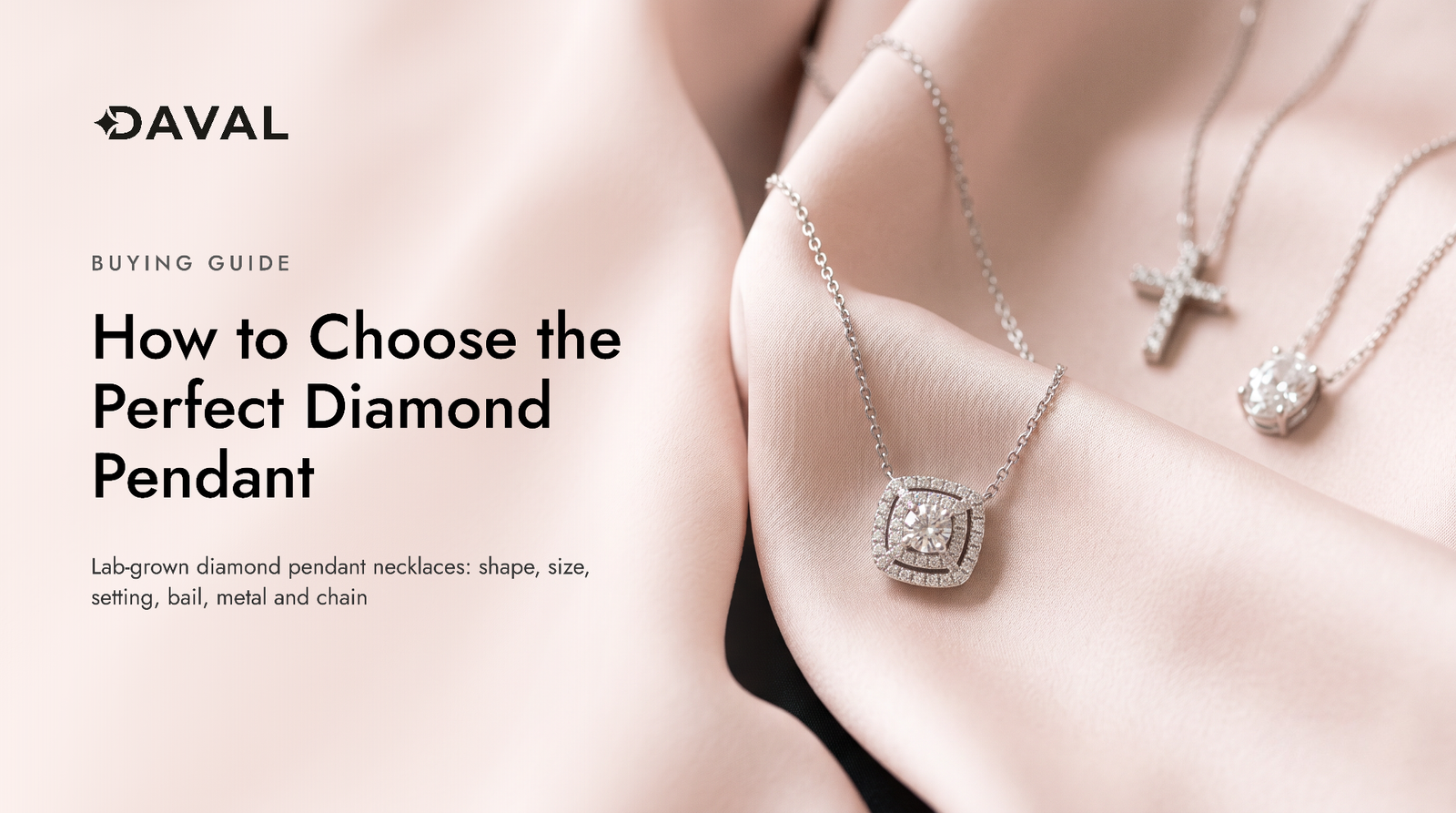
Lab Grown Diamond Pendant Necklace: How to Choose the Perfect Pendant
Lab Grown Diamond Pendant Necklace: How to Choose the Perfect Pendant A diamond pendant is often the
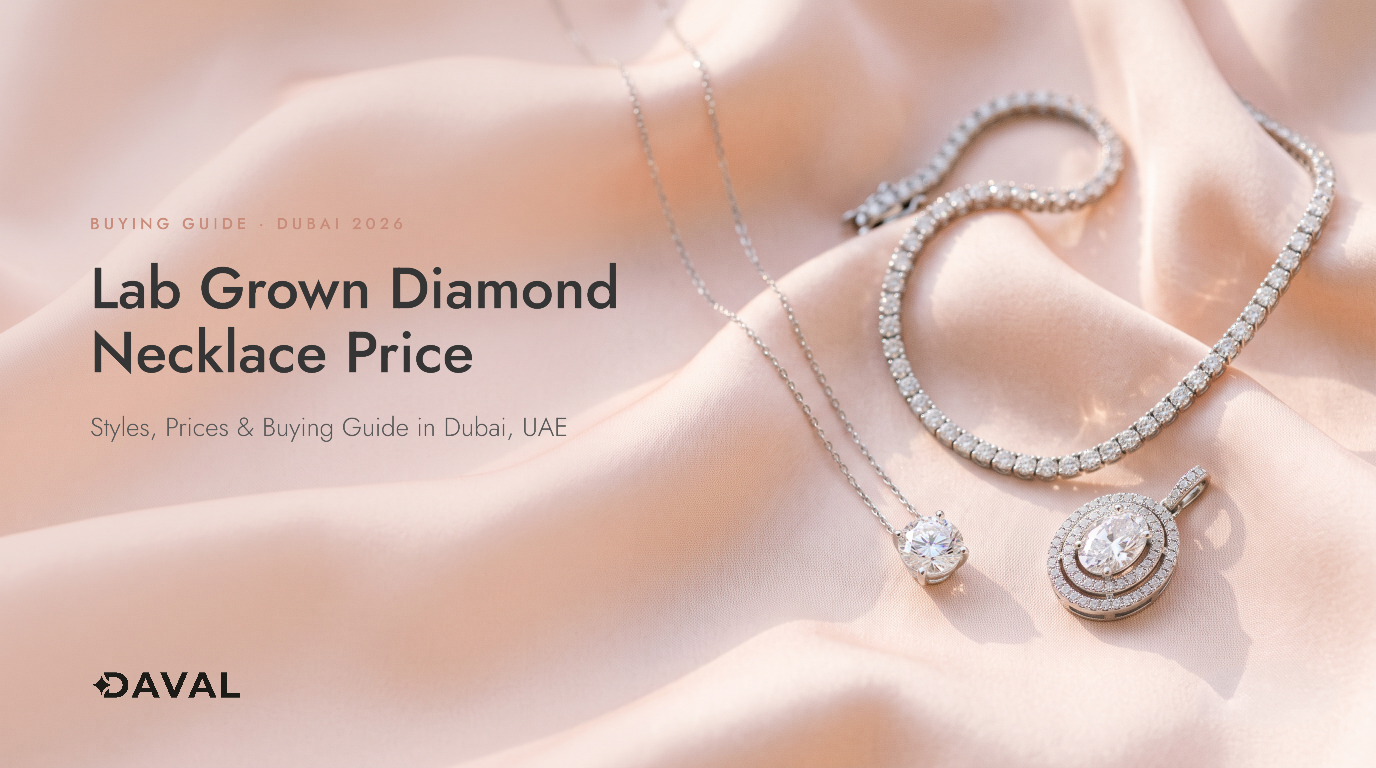
Lab Grown Diamond Necklace Price: Styles, Prices & Buying Guide in Dubai, UAE
Lab Grown Diamond Necklace Price: Styles, Prices & Buying Guide in Dubai, UAE Two diamond necklaces
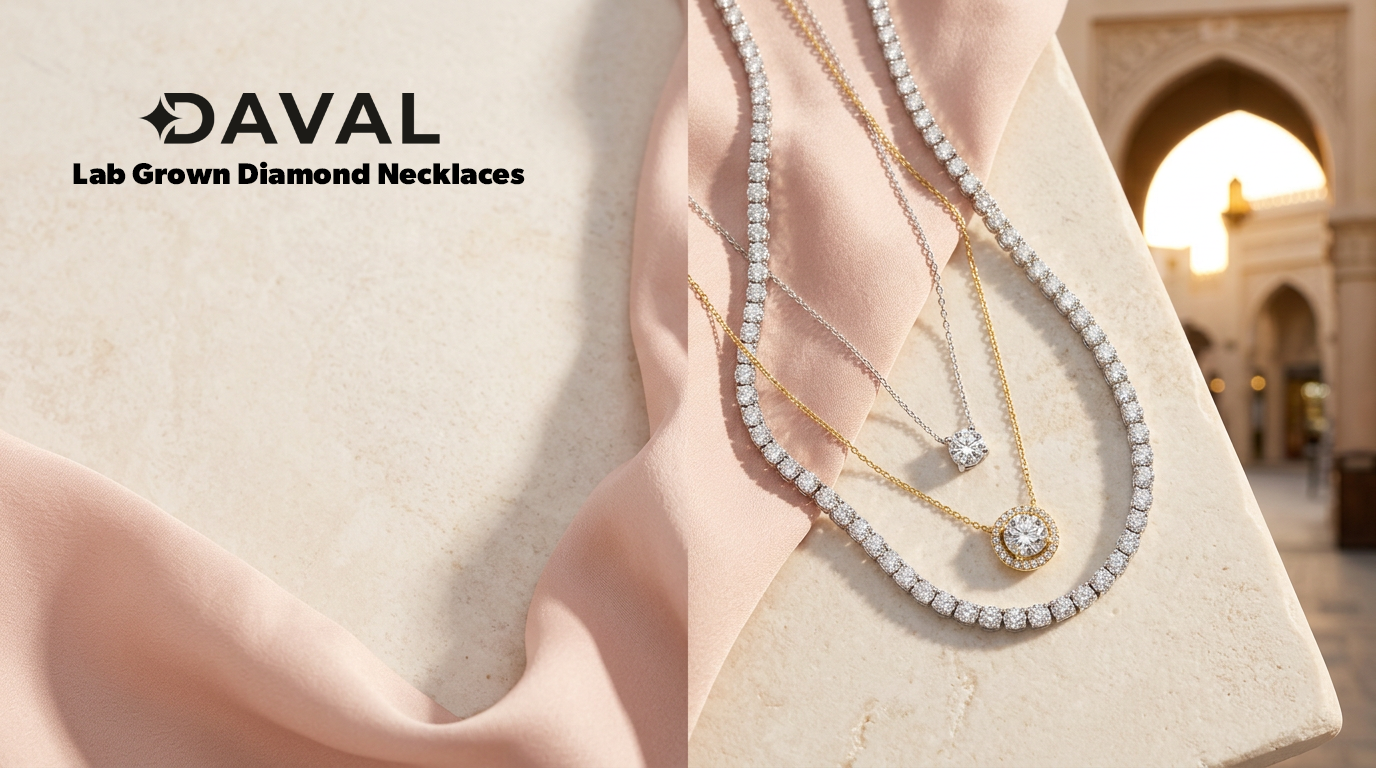
Lab Grown Diamond Necklaces in Dubai: Complete Buying Guide for 2026
Lab Grown Diamond Necklaces in Dubai: Complete Buying Guide for 2026 After rings, necklaces are the piece
Lab Grown vs Natural Diamond Price in UAE: Full 2026 Comparison
Lab Grown vs Natural Diamond Price in UAE: Full 2026 Comparison Lab-grown and natural diamonds look identical
Diamond Jewellery Dubai: Complete Guide to Buying Diamond Earrings, Necklaces & Pendants
Diamond Jewellery Dubai: Complete Guide to Buying Diamond Earrings, Necklaces & Pendants Rings get
3 Carat Diamond Ring: Price, Quality, Cut & Buying Guide in the UAE
3 Carat Diamond Ring: Price, Quality, Cut & Buying Guide in the UAE A 3 carat diamond ring used to
NEW POSTS


October 19, 2026
Lab Grown Diamond Necklaces in Dubai: Complete Buying Guide for 2026

October 11, 2026